Venice, the floating city of romance and canals, is set to undergo a dramatic transformation in its iconic waterways. Starting in 2025, the Italian government will enforce a bold new regulation: a complete ban on all fossil-fuel-powered vessels, including the legendary gondolas. This move aims to combat pollution and preserve the fragile ecosystem of the Venetian Lagoon. But what does this mean for the future of gondola rides, and how does the electric alternative compare to the traditional experience? I took to the canals to find out.
The first thing that strikes you about the electric gondola is the silence. Gone is the familiar putter of the diesel engine, replaced by an almost eerie calm as the boat glides through the water. The absence of engine vibration allows the gondola to move with a newfound smoothness, making the ride feel more like floating on air than navigating a centuries-old canal system. The lack of exhaust fumes is immediately noticeable—no more acrid scent lingering in the air as you pass under bridges or through narrow waterways.
Yet, something intangible is missing. The electric gondola lacks the throaty growl that has echoed through Venice’s canals for generations. For purists, this silence might feel like a loss, a break from tradition. But the gondoliers I spoke with were surprisingly optimistic. Many see the shift as an inevitable evolution, one that aligns with modern environmental concerns while preserving the essence of their craft. "The soul of the gondola isn’t in the engine," one veteran gondolier told me. "It’s in the way we steer, the stories we tell, the connection between the boat and the water."
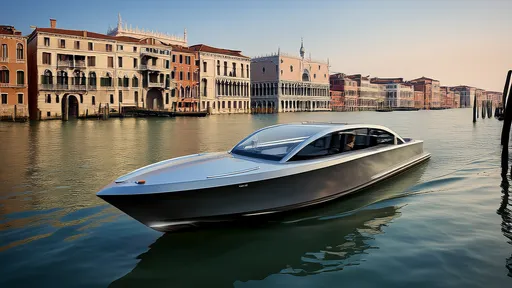
The design of the electric gondola remains faithful to its predecessor. The sleek, black hull, the polished brass fittings, and the iconic ferro (the metal prow ornament) are all present. The only visible difference is the discreet solar panel mounted at the stern, powering the electric motor. Even the traditional rowing technique—the single oar used in a precise, rhythmic motion—hasn’t changed. Gondoliers still stand at the rear, guiding their craft with the same practiced skill as their forebears.
What does change, however, is the experience for passengers. Without engine noise, conversations flow more easily. The gentle lapping of water against the hull becomes more pronounced, and the distant sounds of the city—church bells, murmuring crowds, the occasional accordion—drift across the canals with newfound clarity. It’s a more immersive experience, one that feels closer to the Venice of centuries past, before motorized boats dominated the waterways.
The transition hasn’t been without challenges. Some gondoliers initially worried about battery life, especially during peak tourist seasons when boats run nearly nonstop. But modern lithium-ion batteries, coupled with solar charging, have proven reliable. "We can go a full day without needing a recharge," one gondolier explained. "And if we do need a boost, there are charging stations at major docks." The city has also invested in infrastructure to support the shift, installing charging points along the Grand Canal and other key locations.
Not everyone is convinced. A few traditionalists argue that the electric gondola is a sanitized version of the real thing, a concession to modern environmentalism at the expense of heritage. But the majority of Venetians I spoke with see it as a necessary step. Venice has long struggled with the environmental impact of mass tourism, and the shift to electric boats is part of a broader effort to make the city more sustainable. "We can’t keep pretending the lagoon isn’t suffering," one local shopkeeper said. "If this helps, then it’s worth it."
As for the passengers, reactions were overwhelmingly positive. Tourists, many of whom are already accustomed to electric vehicles in their home countries, appreciated the cleaner, quieter ride. "It feels more authentic, somehow," one visitor from Germany remarked. "Like we’re experiencing the city the way it was meant to be experienced." Others noted that the absence of engine noise made the gondola ride more romantic—no rumbling distractions, just the quiet beauty of Venice unfolding around them.
The economic impact of the transition remains to be seen. Electric gondolas are more expensive upfront, though they promise lower maintenance costs over time. Some gondoliers have expressed concern about the initial investment, particularly those who operate independently rather than as part of larger fleets. The city has offered subsidies to ease the transition, but not everyone has been able to secure funding. "It’s a big change, and change is always hard," one gondolier admitted. "But we’ll adapt. We always do."
Beyond the gondolas, Venice’s broader shift to electric water transport is already underway. Vaporettos (water buses) and private water taxis are also transitioning to electric or hybrid models, though the process is slower due to the larger size and operational demands of these vessels. The goal is clear: a Venice where the only sounds on the water are the splash of oars and the murmur of voices, not the growl of engines.
As I stepped off the electric gondola after my ride, I couldn’t help but feel that this was the beginning of a new chapter for Venice. The city has always been a place where past and present coexist—Renaissance palaces beside modern art galleries, centuries-old traditions alongside cutting-edge innovation. The electric gondola is simply the latest evolution in that story. It may not have the same rumble as its predecessor, but it carries forward the spirit of Venice in a way that feels both timeless and urgently necessary.
By 2025, the last fossil-fuel-powered gondola will disappear from the canals, and a new era will begin. For visitors, the experience will be quieter, cleaner, and perhaps even more magical. For Venetians, it’s a step toward preserving their city for future generations. And for the gondoliers, it’s proof that even the most cherished traditions can adapt—without losing their soul.
By /Aug 6, 2025

By /Aug 6, 2025
By /Aug 6, 2025
By /Aug 6, 2025
By /Aug 6, 2025

By /Aug 6, 2025
By /Aug 6, 2025

By /Aug 6, 2025

By /Aug 6, 2025
By /Aug 6, 2025
By /Aug 4, 2025

By /Aug 4, 2025

By /Aug 4, 2025

By /Aug 4, 2025

By /Aug 4, 2025
By /Aug 4, 2025

By /Aug 4, 2025

By /Aug 4, 2025

By /Aug 4, 2025

By /Aug 4, 2025