In a historic move for both conservation and astronomy, a small South American nation has achieved an unprecedented global distinction. The United Nations recently certified this country as the world's first fully recognized 'Dark Sky Nation,' designating its entire territory as an International Dark Sky Sanctuary.
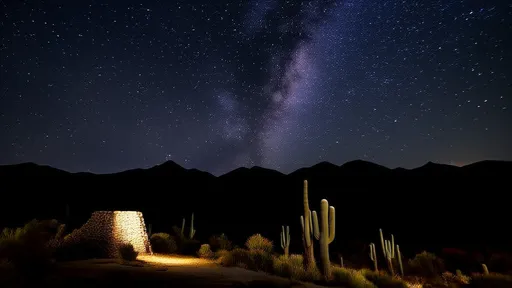
The announcement sent ripples through scientific and environmental communities worldwide. This certification means that light pollution across the country has been reduced to negligible levels, allowing near-perfect conditions for astronomical observation with the naked eye. The night skies reveal a celestial spectacle unseen in most parts of the industrialized world - the Milky Way stretches vividly across the firmament, while meteor showers and distant galaxies become visible without optical aids.
What makes this achievement remarkable isn't just the pristine quality of the night skies, but the nationwide commitment required to attain it. Unlike isolated dark sky preserves that cover limited areas, this certification applies to every square kilometer of the country's territory. From urban centers to remote wilderness, all regions have implemented strict lighting ordinances and public education campaigns to eliminate light pollution.
The country's geography provided natural advantages in this endeavor. Situated high in the Andes mountains with arid climate conditions, it naturally enjoys more clear nights than many other locations. However, government officials emphasize that achieving the certification required concerted policy efforts spanning nearly a decade. Legislation mandated full cutoff shielding for all outdoor lighting, restrictions on advertising illumination, and spectral standards eliminating blue-light emissions after sunset.
Astronomers worldwide are celebrating the development. Major observatories have operated in the country's high-altitude regions for decades, taking advantage of the atmospheric conditions. Now, these facilities will benefit further from enhanced protection against the creeping threat of light pollution that has compromised other famous observation sites. Early data suggests the night skies have actually improved in quality over the past five years as the lighting regulations took effect.
Tourism officials anticipate significant interest from astrotourists seeking unparalleled stargazing experiences. The country plans to develop infrastructure to accommodate visitors while maintaining its dark sky integrity. Special viewing platforms are being constructed at optimal locations, and local guides are receiving training in celestial navigation and astronomy interpretation. Hotels and resorts are adapting with lighting systems that preserve night vision while providing necessary illumination.
The environmental implications extend beyond astronomy. Ecological studies have documented positive effects on nocturnal wildlife since the lighting reforms began. Species ranging from migratory birds to insects demonstrate healthier behavioral patterns without artificial light disrupting their natural cycles. Conservationists note particular benefits for endangered species that rely on darkness for hunting, navigation or reproduction.
Cultural preservation forms another dimension of this achievement. Indigenous communities in the region have long incorporated celestial knowledge into their traditions and calendars. The dark sky certification helps protect this astronomical heritage while creating opportunities for indigenous starguides to share their ancestral knowledge with visitors. Several communities are developing ethnoastronomy programs as part of the tourism initiative.
The United Nations recognition includes provisions for ongoing monitoring and enforcement. An independent commission will conduct annual sky quality measurements across the country, while local authorities maintain responsibility for enforcing lighting codes. The certification could be revoked if light pollution levels rise above established thresholds, creating a powerful incentive for sustained compliance.
As news of the certification spreads, other nations have expressed interest in pursuing similar designations. Several countries with significant astronomical resources have contacted UN officials about the certification process. However, experts caution that replicating this achievement presents formidable challenges for more populous or industrialized nations where light pollution is already widespread.
The newly designated Dark Sky Nation now stands as both a conservation model and a living laboratory. Scientists plan to study the ecological impacts of large-scale light pollution reduction, while urban planners from around the world are examining the lighting policies as potential blueprints for their own communities. For now, the country offers something increasingly rare in the modern world - the opportunity to look up and see the universe as our ancestors saw it, in all its unpolluted glory.
In an age where artificial light has erased the stars for much of humanity, this small nation has proven that with sufficient commitment, the night can be reclaimed. Its achievement shines as a beacon (though certainly not a light-polluting one) demonstrating that technological progress and natural preservation can coexist when pursued with vision and determination.
By /Aug 6, 2025

By /Aug 6, 2025

By /Aug 6, 2025

By /Aug 6, 2025

By /Aug 6, 2025

By /Aug 6, 2025

By /Aug 6, 2025
By /Aug 6, 2025

By /Aug 6, 2025

By /Aug 6, 2025

By /Aug 4, 2025

By /Aug 4, 2025

By /Aug 4, 2025

By /Aug 4, 2025

By /Aug 4, 2025

By /Aug 4, 2025

By /Aug 4, 2025

By /Aug 4, 2025

By /Aug 4, 2025

By /Aug 4, 2025